From Reference To Rose
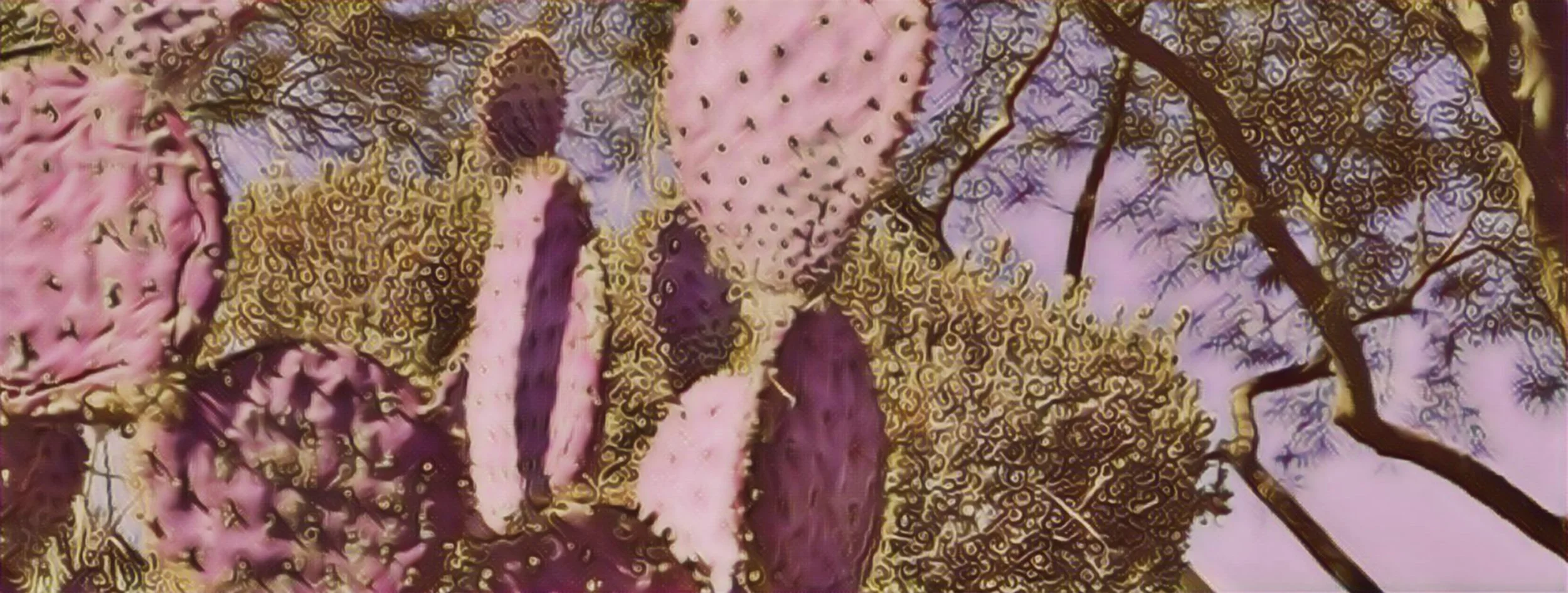
Rio Salado Bike Path, Mesa, AZ
There’s a common misconception that the moment an artist finishes a piece, it’s exactly as they intended it to be. The truth is often far more complex, and sometimes, the best works are the ones that required the most wrestling—and time—to appreciate fully. “Wasteland Rose,” one of my largest and most expressive oil paintings to date, is a perfect example of this artistic evolution.
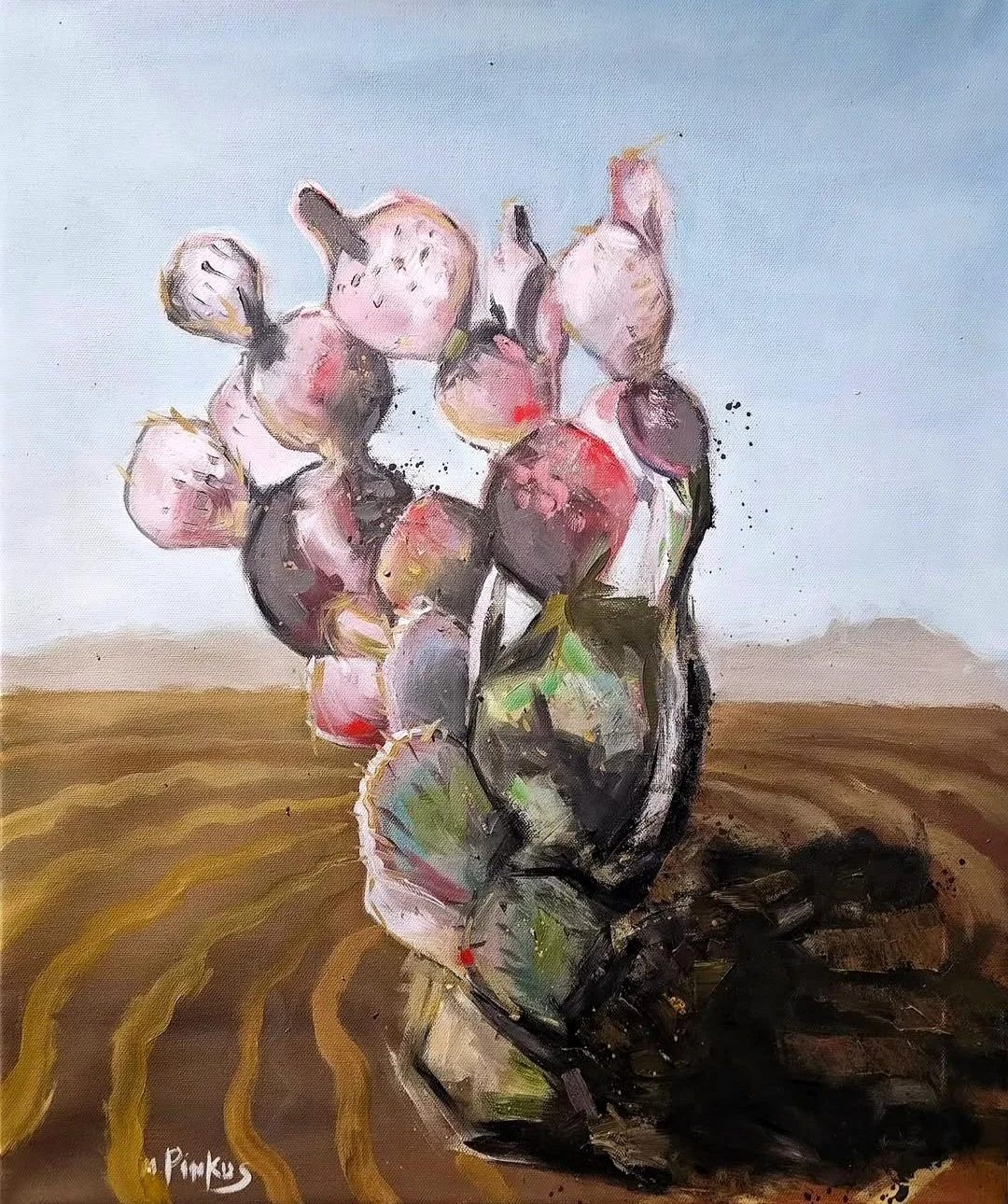
“Wasteland Rose” - 20”x 24” - 2024
Every original oil painting begins with a moment of inspiration, often captured with my phone on a bike ride around the city. This photo of a uniquely pigmented purple and pink prickly pear cactus, stoically standing amidst the arid ground near the Rio Salado bike path in Mesa, was the catalyst for the painting. The desert plant itself felt almost otherworldly, perfectly isolated in that intense Arizona light.
However, my goal is never photo-realism. When you look at the source material next to the finished oil painting, you are seeing the difference between observation and vision. I’m not just replicating the subject; I’m interpreting the feeling it gives me—the resilience, the stoicism, the enduring beauty.
My process is deeply rooted in texture and energy. I use the palette knife heavily, building up layers of oil paint with my signature impasto technique to give the surface a physical, rugged quality. This is where the true transformation happens.
Reference photo (L) and original painting (R)
In “Wasteland Rose,” I used exaggerated, almost surreal hues of purple and pink, pushing the subject toward a kind of atmospheric presence. I deliberately simplified the background and used dynamic shadow to make the cactus appear sculptural and transcendent, standing alone against a barren backdrop. There's an almost surreal quality to the painting; I always get a certain Twilight Zone-y feeling when I see it.
I don't generally share my references, but I thought it would be interesting to anyone reading this to see my process!